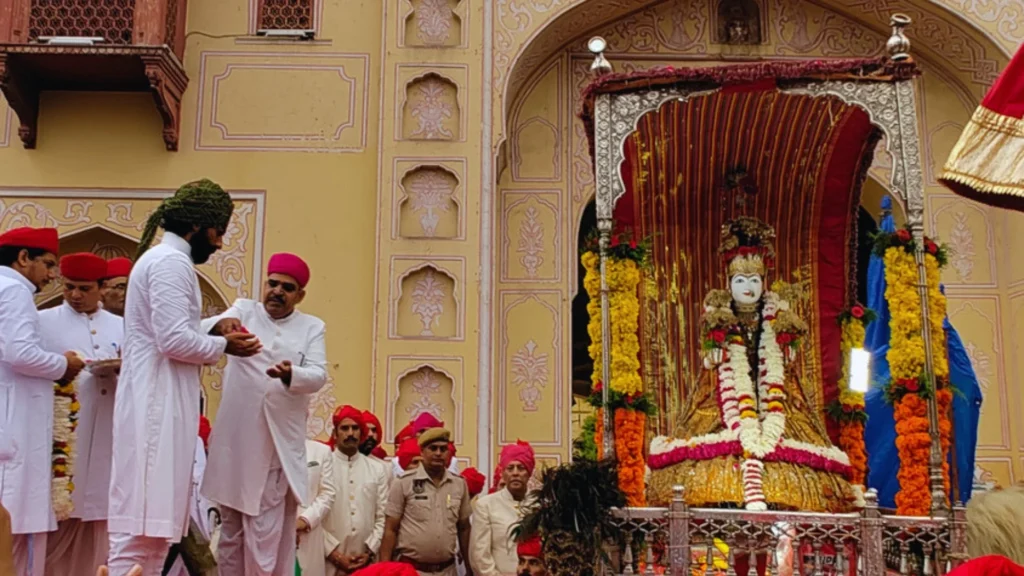

Charan Mandir Jaipur is a small, peaceful Hindu temple located on a hill ridge between Jaigarh Fort and Nahargarh Fort in the Aravalli Hills of Jaipur. Many tourists who come to Jaipur to see the grand forts and busy markets often miss this hidden place. But this 16th-century temple offers a special experience filled with old legends, nature, and the devotion of the Amber kings.
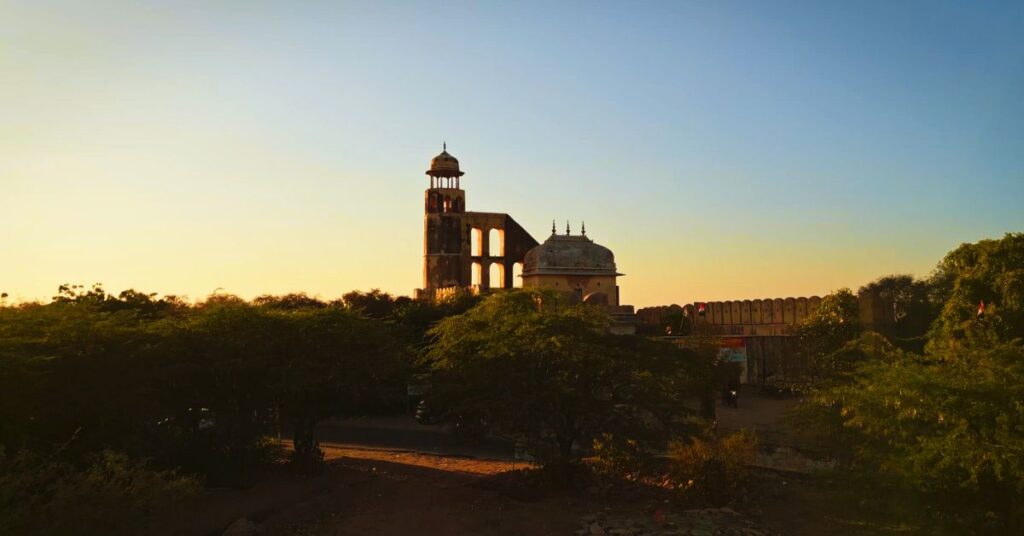
Charan Mandir was built by Maharaja Sawai Man Singh I. The most important thing here is believed to be the footprint of Lord Krishna inside the temple. This secret has surprised and inspired devotees for many years.
A Dream That Changed Everything: The Origin of Charan Mandir Jaipur
According to local stories, Lord Krishna appeared in a dream to Maharaja Man Singh I. Krishna told him to build a temple at a sacred spot within the Ambika Van, a thick forest. People say that Krishna himself left his footprint and the footprints of cows to show the exact place.
The king asked his royal priests to check if the marks matched the descriptions in the Shrimad Bhagwat Mahapurana (Chapter 10). The details were the same, so the king believed this was a holy sign and built the temple. Charan Mandir Jaipur became a place not only for worshipping Lord Krishna but also for remembering an event believed to have occurred in the Dwapar Yuga.
How Krishna’s Sacred Footprints Appeared at Charan Mandir, Jaipur
Krishna went up to the snake, touched it with his right foot, and was free from the curse and a boy once again. Believers think this miracle created a perfect footprint of Krishna and five cow hoofprints on the stone, which are still preserved inside the Temple and worshipped today. Devotees see these footprints as a real sign of Krishna, not just imagination.
Why Charan Mandir Jaipur Looks Like a Fort Instead of a Temple
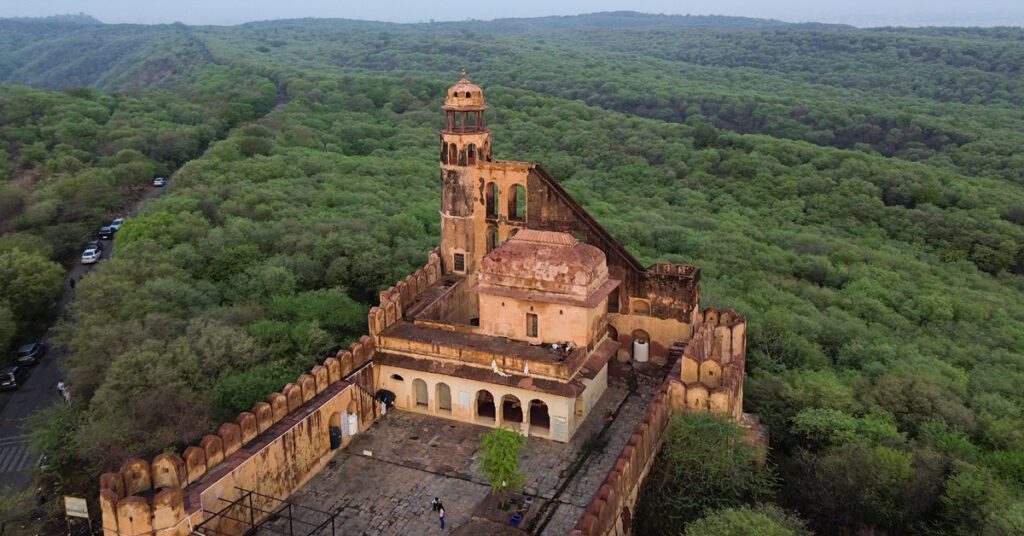
- It has a tall watchtower.
- A strong boundary wall
- A large water tank
Maharaja Man Singh I was a strong leader and a very religious man. He visited the temple often and always took care of it. Over time, more and more pilgrims started coming to worship the holy footprints.
Historians think the tower may have existed even before the temple, used to watch over the Ambika Van forest. The design is simple and peaceful. There are no noisy crowds or shops here, only fresh air, silence, and devotion.
Stories of Mystery and Movies
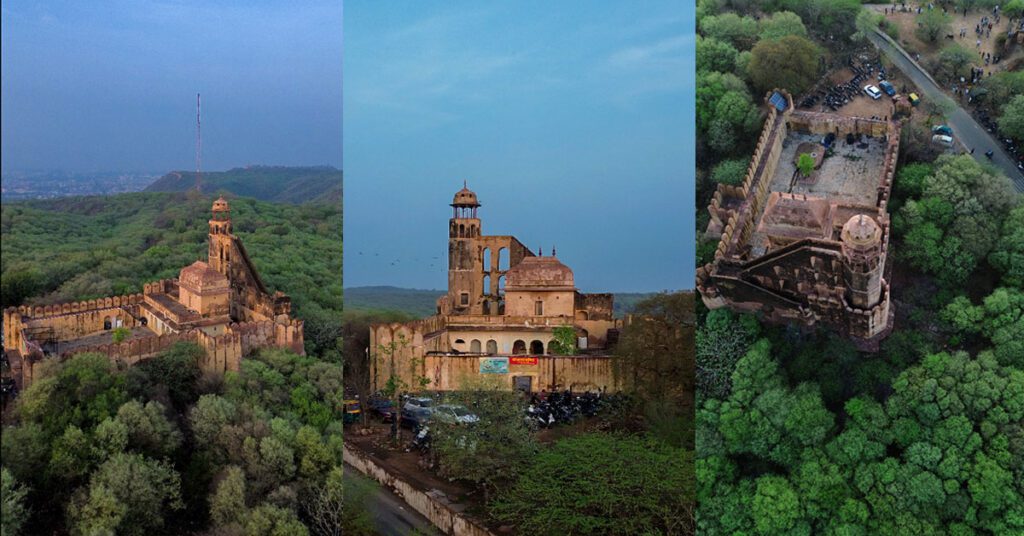
Because the temple is on a quiet hilltop, some people say it is haunted, but regular visitors do not believe this. They say the place feels safe, calm, and blessed, not scary. This Temple has also been used in filming. Parts of the Bollywood movie Garv, starring Salman Khan, were shot here. Even after that, the temple remains peaceful and is not crowded by tourists.
Why Trekkers Love Charan Mandir Jaipur?
Charan Mandir Jaipur lies along a popular trekking route in the Aravalli hills. Many trekkers start their journey from here towards Hathnui Kund. The trail is easy and suitable for beginners.
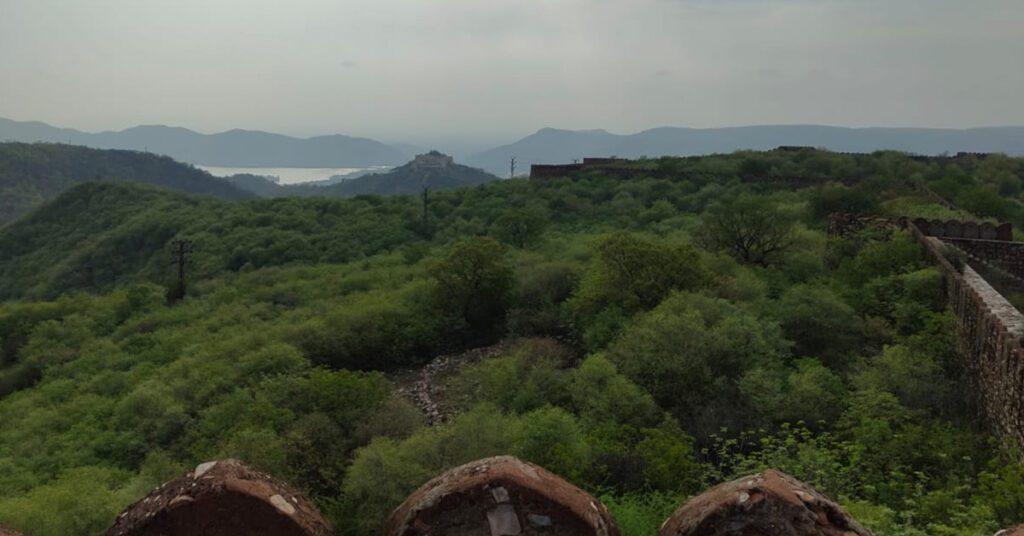
The sunrise views from the hill are breathtaking. From here, visitors can see large parts of Jaipur city. On clear days, you can also enjoy views of the Gadhganesh Temple and the Jal Mahal floating in Man Sagar Lake below.
The temple is located close to Nahargarh Fort, built by Maharaja Sawai Jai Singh II in 1734. Together, the temple and the fort show how Jaipur’s rulers combined religion, safety, and thoughtful planning in the Aravalli hills.
A Peaceful Spiritual Experience
People feel like Ancient traditions are still alive here. Most visitors are devotees who come to see the sacred footprints, but history lovers and trekkers also enjoy exploring this place.
Jaipur Nagar Nigam Logo: Inspired by the Charan Mandir Watchtower
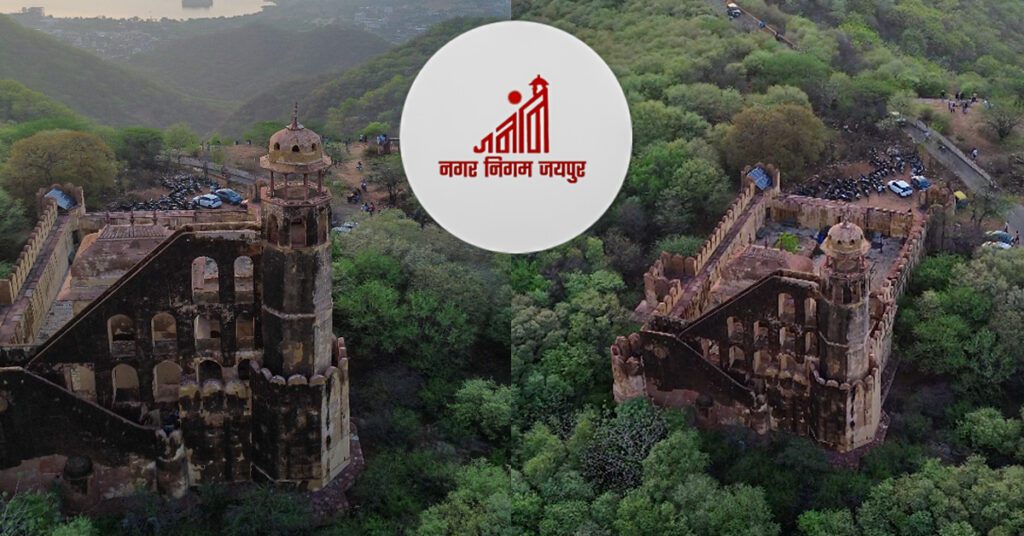
You can see Charan Mandir from many places in Jaipur because it is high up on the Aravalli Hills. This watchtower has been a landmark in the city for a long time, and its unique shape inspired the Jaipur Nagar Nigam logo, especially the watchtower and sloping structure. These features stand for vigilance, guidance, and stability. The logo’s design shows a strong connection between Jaipur’s history and its civic identity.
📍 Location: Between Jaigarh and Nahargarh Forts, Aravalli Hills, Jaipur
🌅 Best Time: Early morning (especially for sunrise)
🎯 Perfect For: Pilgrims, history lovers, nature lovers and trekkers
FAQs About Charan Mandir Jaipur
Q1. Where is Charan Mandir Jaipur located?
Charan Mandir is located in the Aravalli Hills between Jaigarh Fort and Nahargarh Fort in Jaipur.
Q2. Why is Charan Mandir famous?
It is believed to house the sacred footprints of Lord Krishna, mentioned in the Bhagwat Mahapurana.
Q3. Is Charan Mandir good for trekking?
Yes, it is a popular trekking spot with easy trails and beautiful sunrise views.
Q4. What is the best time to visit Charan Mandir Jaipur?
Early morning is the best time, especially to enjoy sunrise and a peaceful aarti.
At India in Lens, we share in-depth Jaipur heritage stories, documenting hidden temples and forgotten legends like Charan Mandir Jaipur.