
The first thing you’ll notice on the morning of the Teej Festival Jaipur isn’t the procession; it’s the colour. Before the streets fill with music, the Pink City’s bazaars begin to glow with bright Lehariya fabrics, fresh marigold garlands, and the aroma of warm Ghewar. By the time the royal procession leaves the City Palace, thousands of people have already gathered along Tripolia Bazaar, waiting for a tradition that has connected generations of Jaipur’s residents.
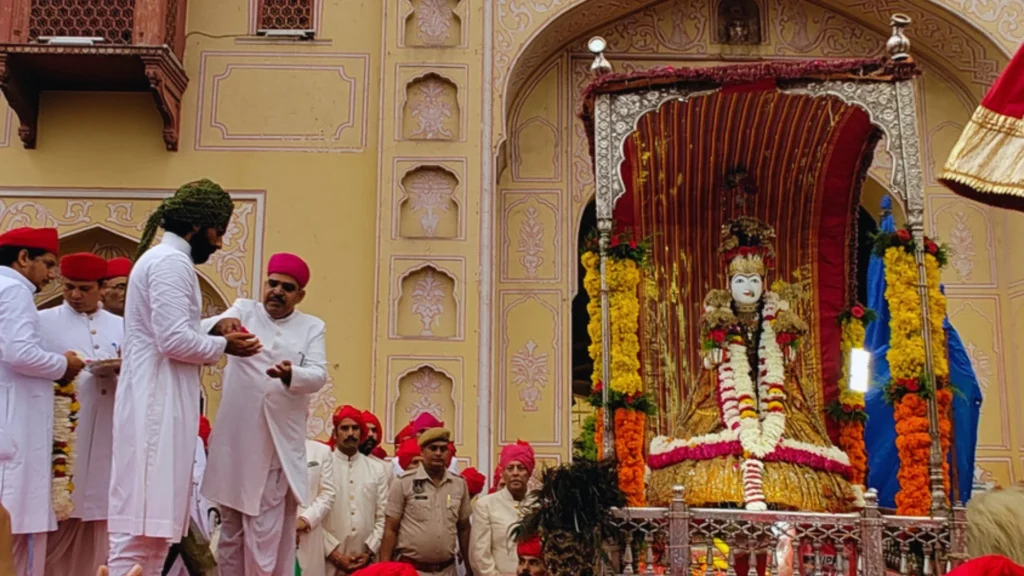
Among all the festivals celebrated in Rajasthan, the Teej Festival in Jaipur holds a special place. It is not just a religious occasion; it is a living celebration of the city’s royal heritage and cultural identity.
If you’ve ever wondered why Teej is celebrated or why Jaipur’s Teej Festival is famous across India, here’s everything you need to know.
Why is Teej Celebrated?
The origin of Teej is deeply rooted in Hindu mythology.
According to ancient beliefs, Goddess Parvati performed years of intense meditation and unwavering devotion to win Lord Shiva as her husband. Her dedication symbolized patience, faith, and unconditional love. Moved by her devotion, Lord Shiva accepted Parvati as his divine consort.
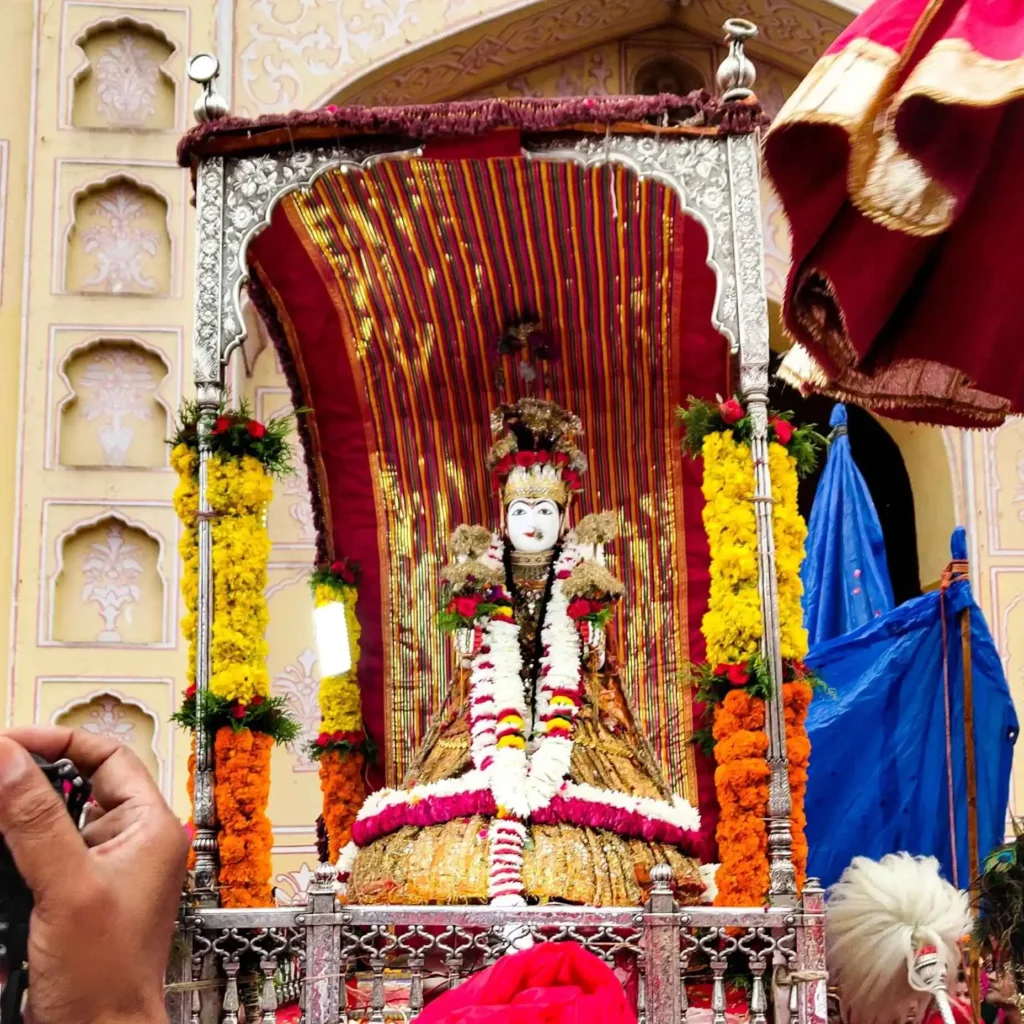
This sacred union is celebrated every year as Hariyali Teej, making the festival a symbol of:
- Love
- Devotion
- Faith
- Prosperity
- Marital harmony
Today, married women pray for the well-being of their husbands, while unmarried women seek blessings for a loving life partner. Beyond its spiritual meaning, Teej also marks the arrival of the monsoon—a season that brings greenery, hope, and new beginnings after Rajasthan’s intense summer.
Why is Jaipur’s Teej Festival So Famous?
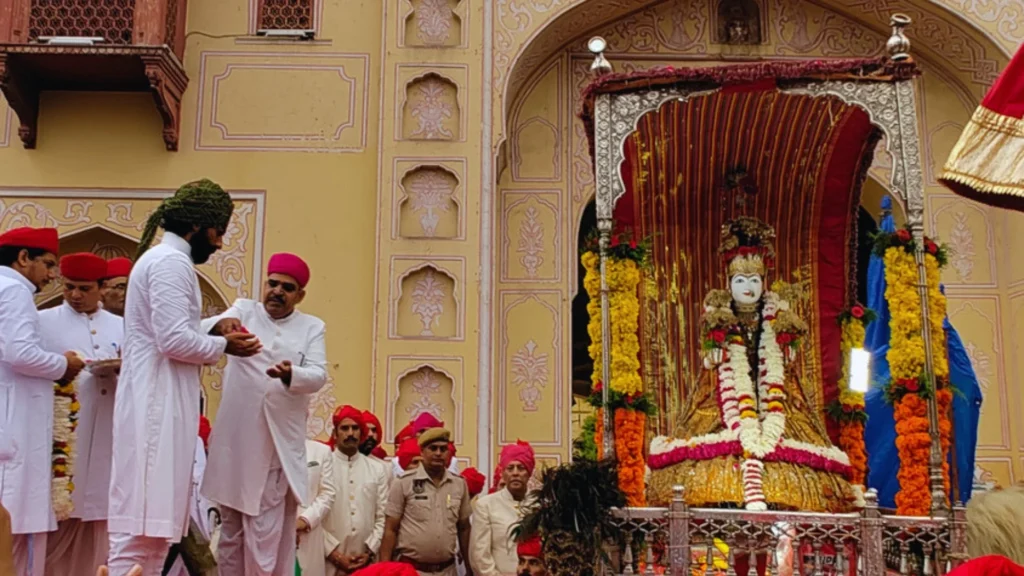
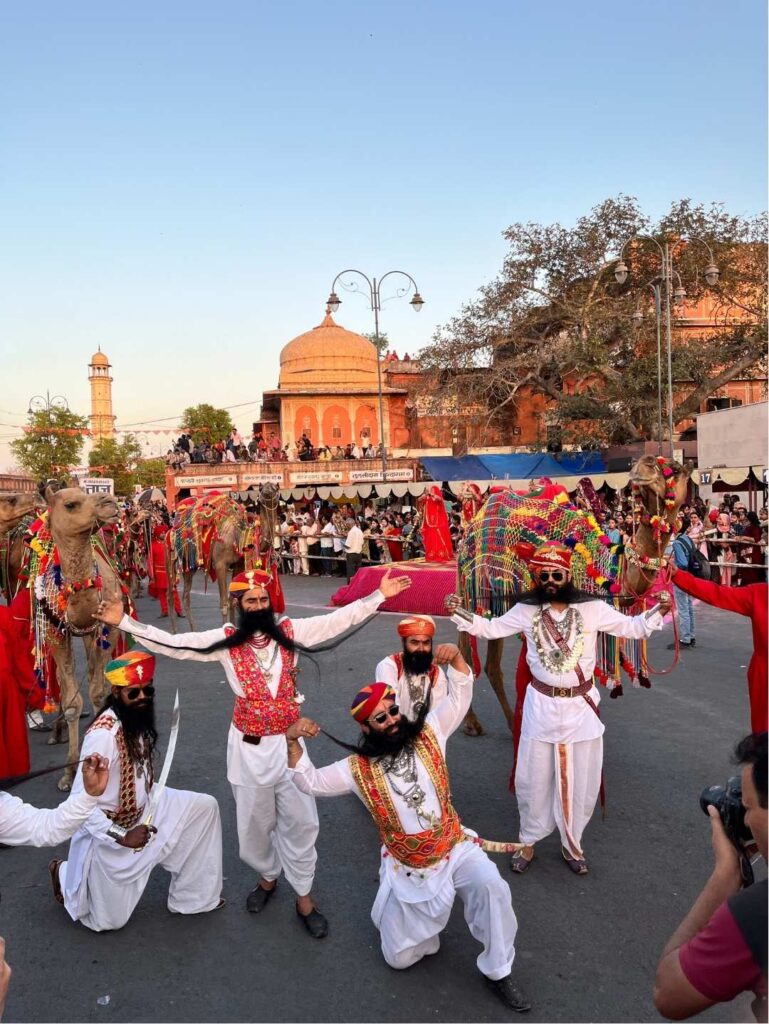
Teej is celebrated across North India, but the Teej Festival in Jaipur stands apart for its magnificent Royal Procession, or Shahi Sawari of Teej Mata. The beautifully adorned idol of Teej Mata is carried from the City Palace through the historic streets of the Pink City, surrounded by decorated elephants and camels, royal horses, musicians, and folk performers.
What makes the experience truly special is the chance to see Rajasthan’s living culture in one place. From Ghoomar and Kalbeliya to Kacchi Ghodi, Kathputli (puppetry) and Behrupiya Kala, the procession brings together traditional art forms that you may not easily encounter during an everyday visit to Jaipur.
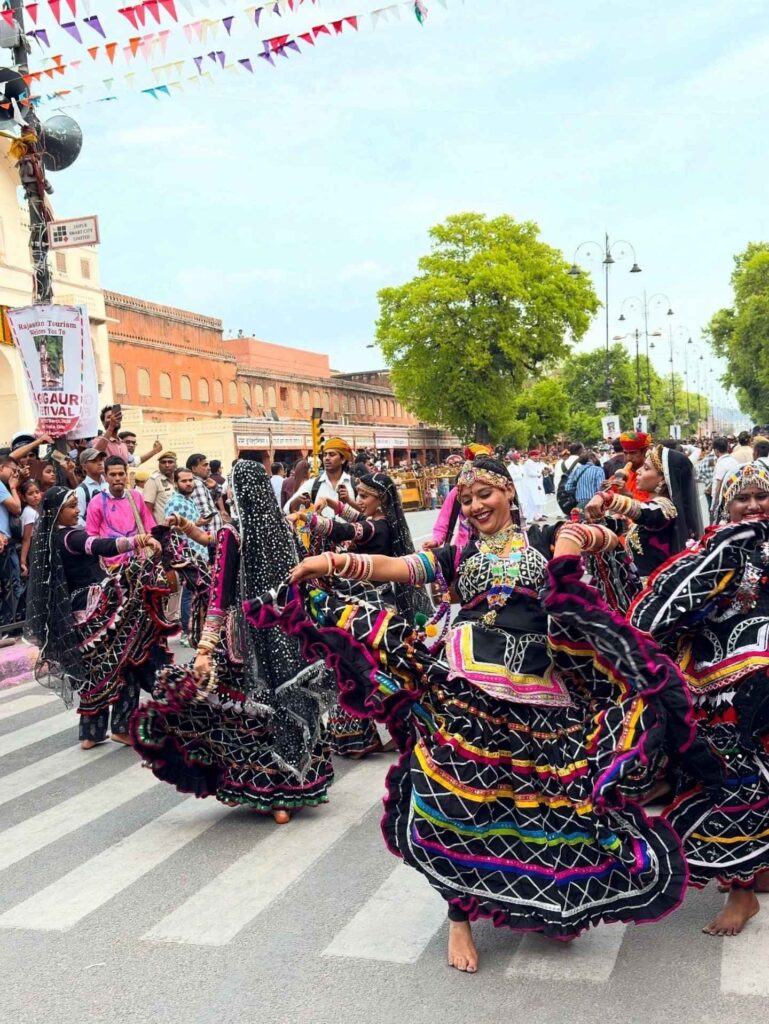
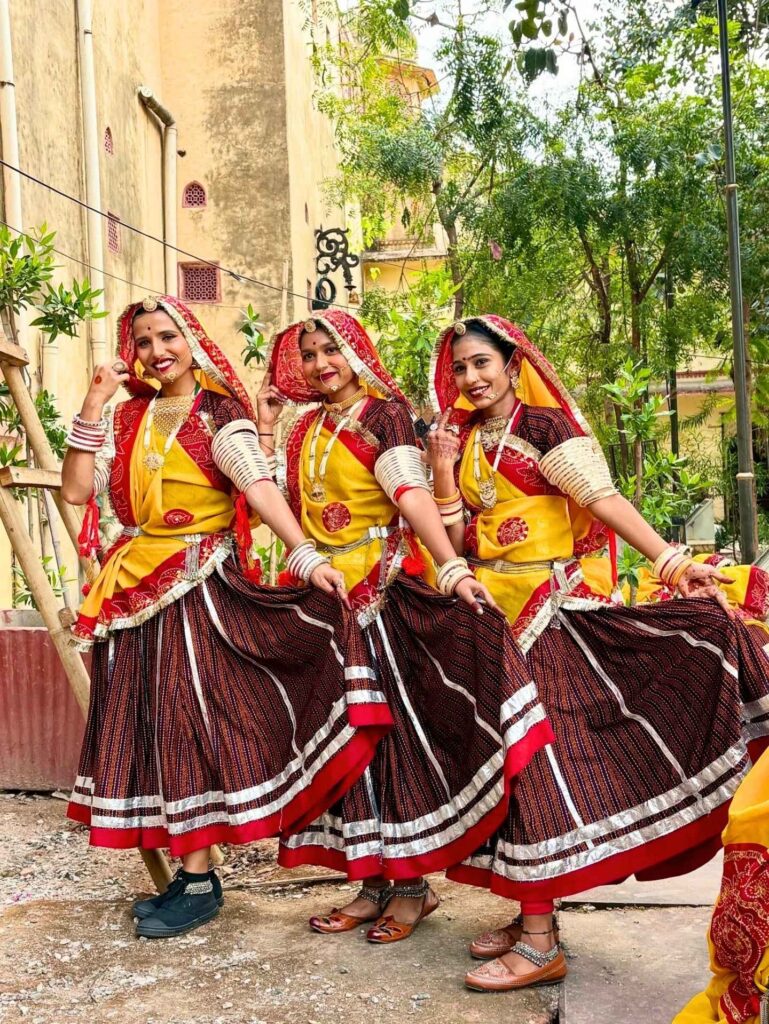
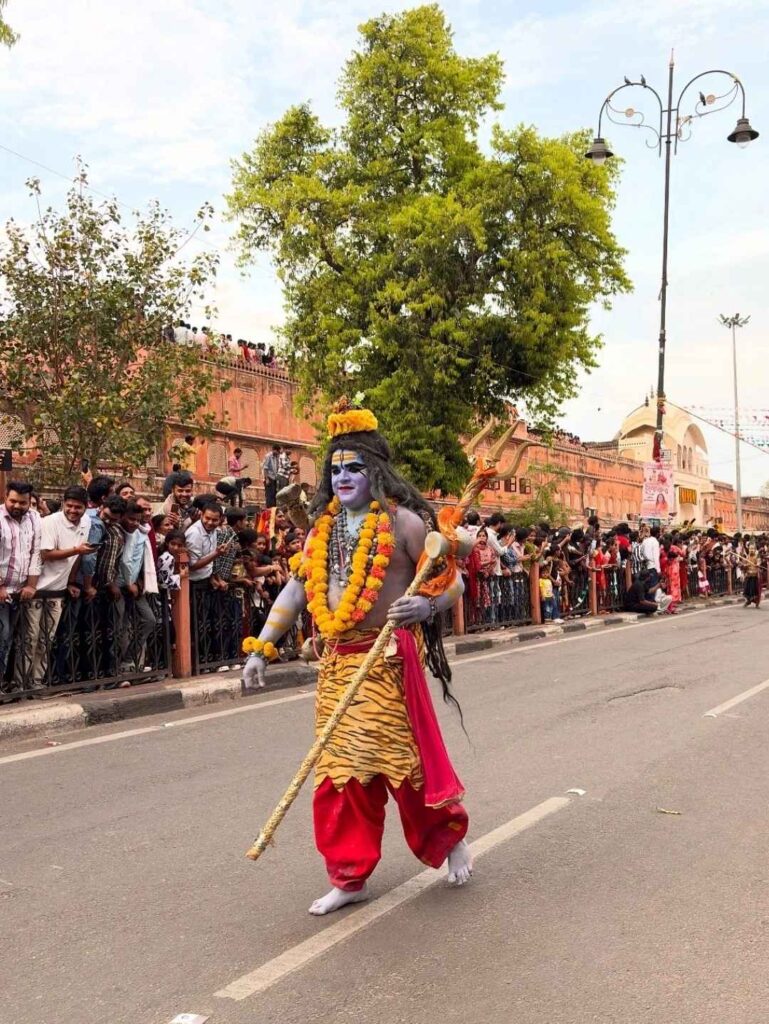
If you want to look beyond Rajasthan’s forts and palaces and experience its colourful, lesser-seen traditions up close, Jaipur during Teej is worth experiencing at least once. It isn’t simply a royal procession; it’s Rajasthan’s culture coming alive on the streets of the Pink City.
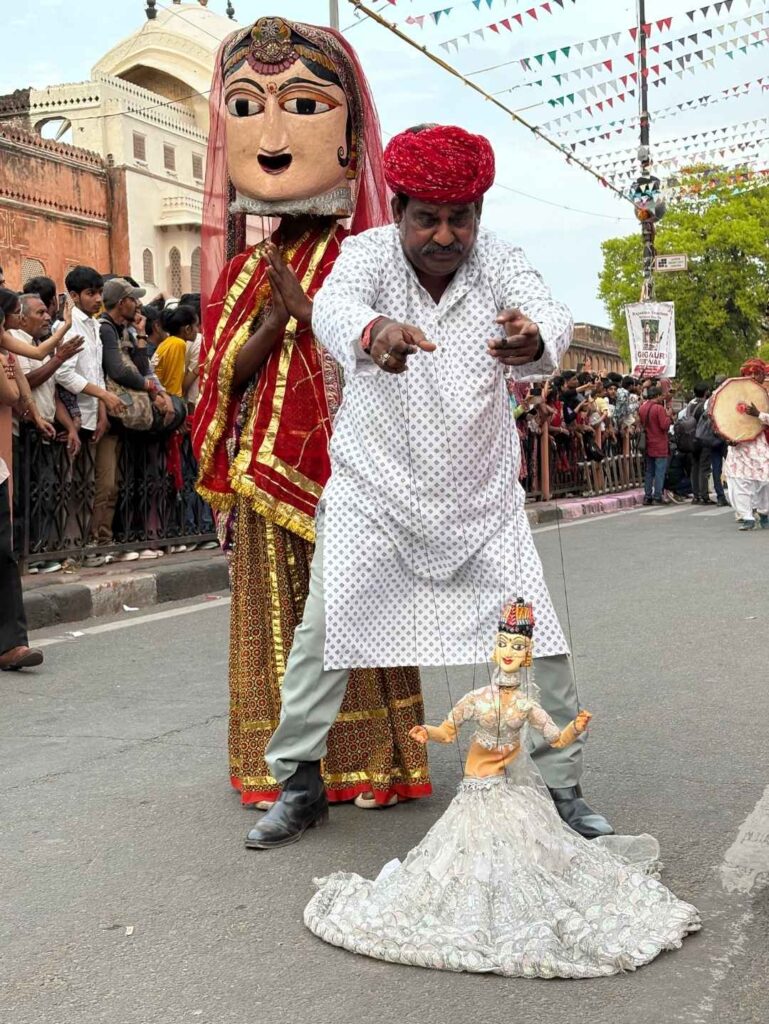
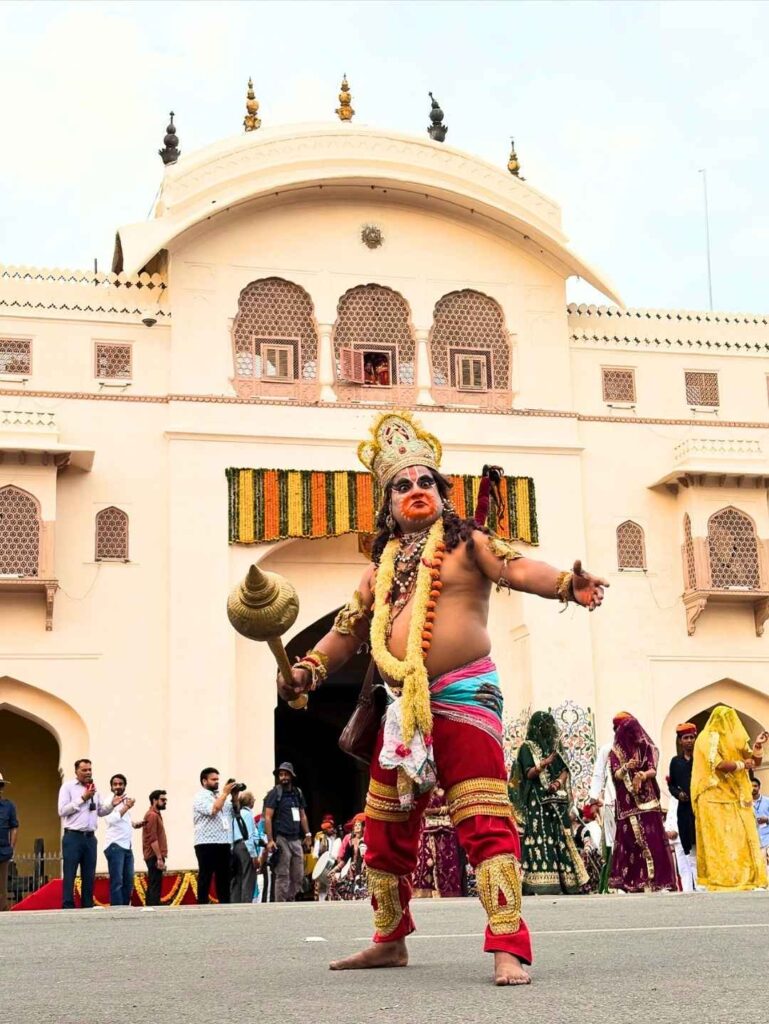
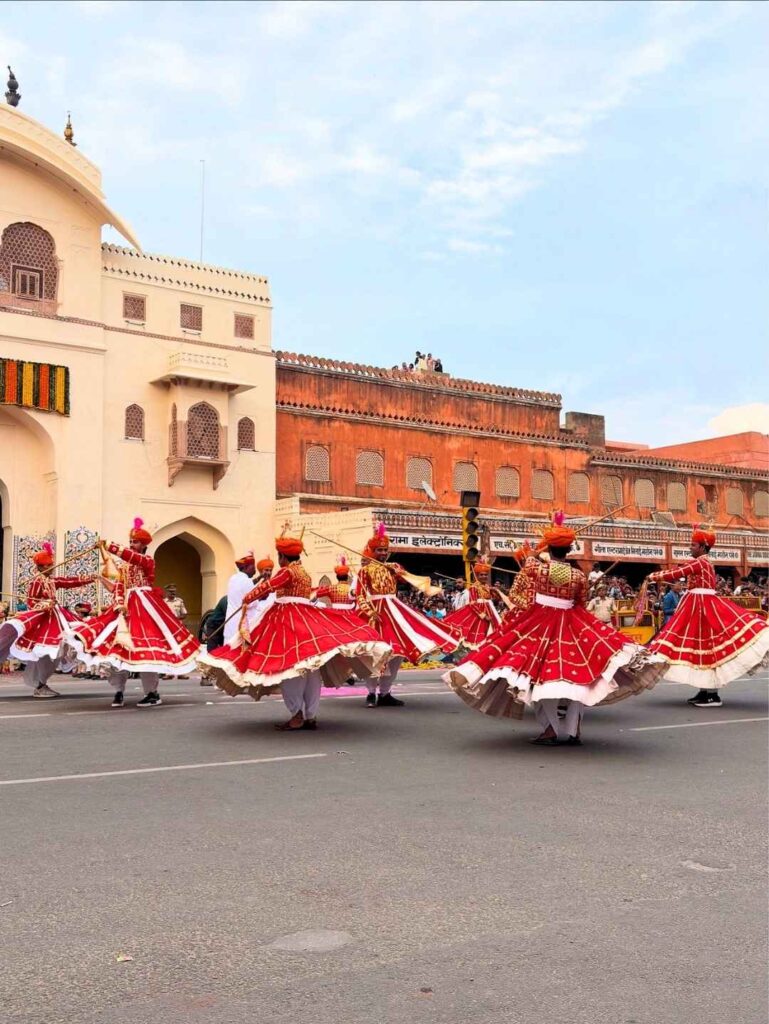
History of the Royal Teej Procession in Jaipur
The Royal Teej Procession in Jaipur is not simply a colourful parade. Look closely, and almost every part of the procession has a story connected to Jaipur’s royal past.
The preparations begin inside the City Palace, where Teej Mata is beautifully adorned and worshipped by Jaipur’s former royal family before being brought out for the grand Shahi Sawari.
One of the most special moments comes at the historic Tripolia Gate. As Teej Mata emerges from the palace, Padmanabh Singh performs the aarti, offers prayers and seeks the blessings of Teej Mata, continuing a royal tradition associated with welcoming the monsoon, prosperity and new beginnings in Rajasthan.
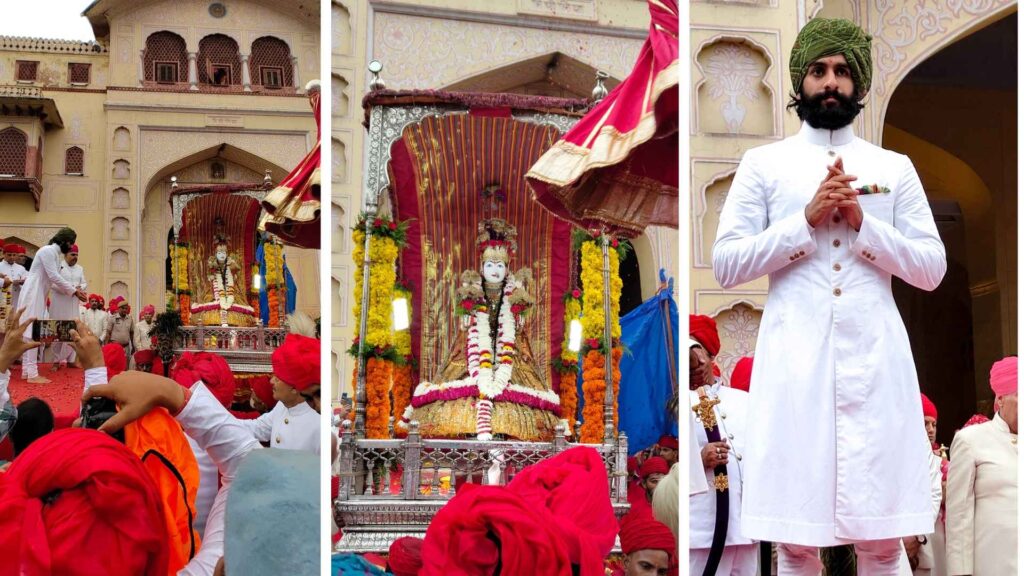
But here’s something you might miss if you don’t know the story.
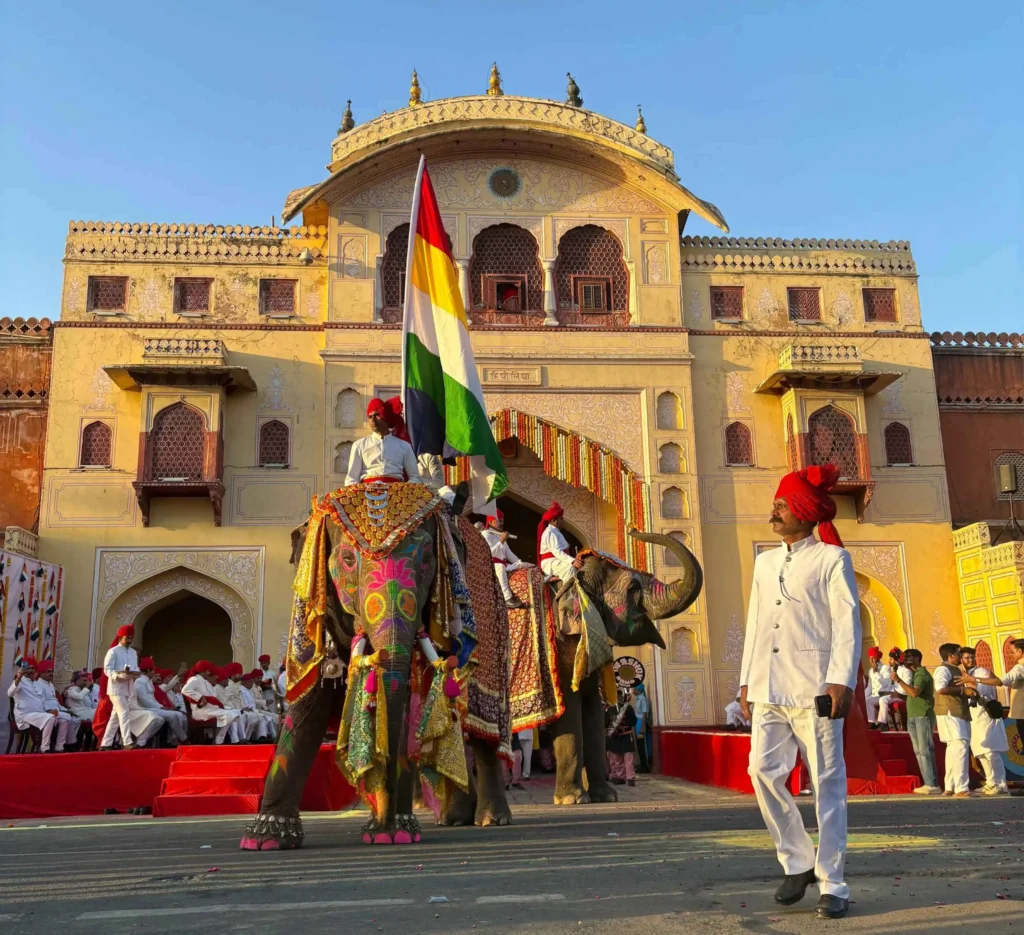
Before Teej Mata’s sawari comes the Nishan Hathi, a ceremonial elephant carrying Jaipur’s famous Pachranga flag; it leads the procession as a symbol of Jaipur’s former royal state.
And even this flag has a story.
The Pachranga flag is traditionally linked to Raja Man Singh I of Amber, one of Emperor Akbar’s most prominent generals. During his campaigns in the north-west and Afghanistan, Man Singh defeated five Afghan tribes. The victory inspired the creation of a five-coloured standard, known as the Pachranga, which eventually became one of the most recognisable symbols of Jaipur’s royal identity.
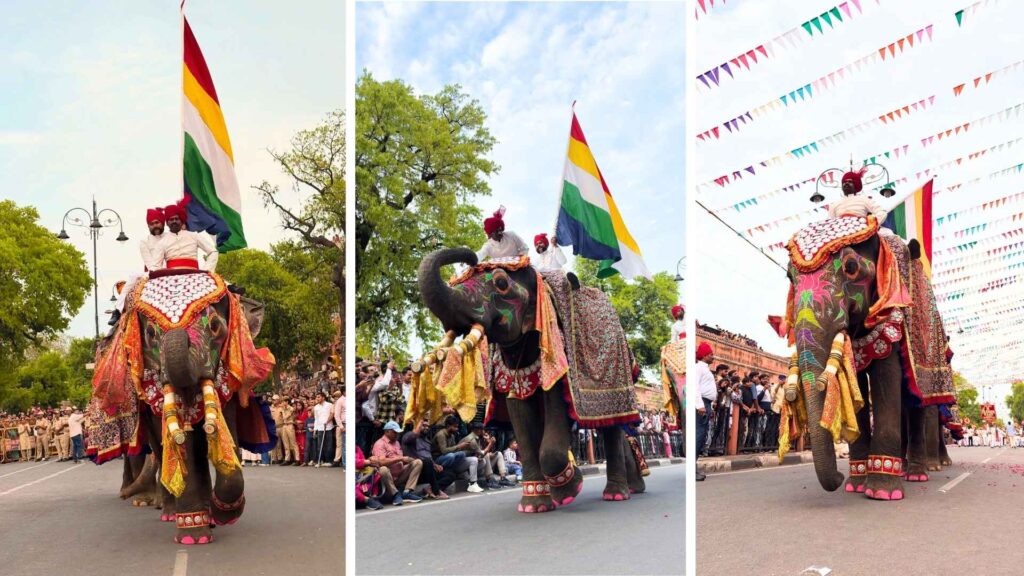
That is why seeing the Nishan Hathi leading Teej Mata feels different once you know the history behind it. Before the dancers, musicians, and celebrations fill Jaipur’s old streets, the city’s royal standard leads the way.
The Shahi Sawari isn’t just celebrating Teej. In many ways, it is Jaipur carrying its history through the streets of the Pink City, one generation after another.
Best Places to Experience the Teej Festival in Jaipur
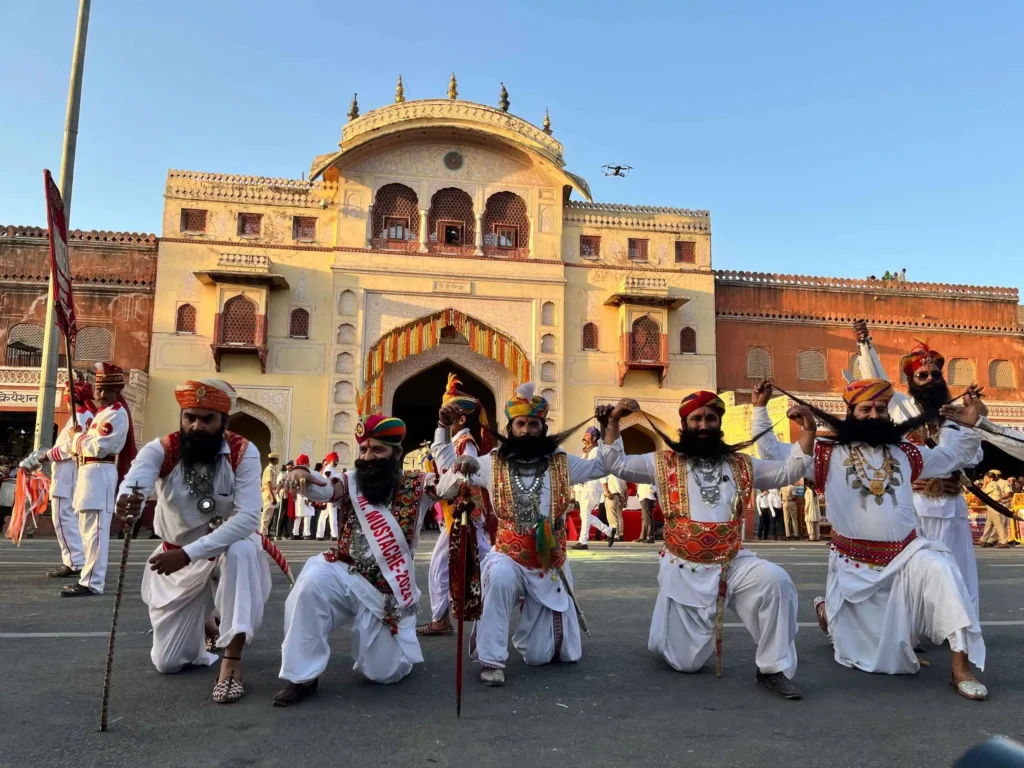
Tripolia Gate is where Jaipur’s Teej celebration truly comes alive. As Teej Mata’s royal procession makes its way out from the City Palace, the streets begin to fill with colour, music and excitement. The procession then travels through Tripolia Bazaar, Chhoti Chaupar and Gangauri Bazaar, accompanied by beautifully decorated elephants, folk artists, musicians and traditional performers.
Teej Festival Timings and Schedule
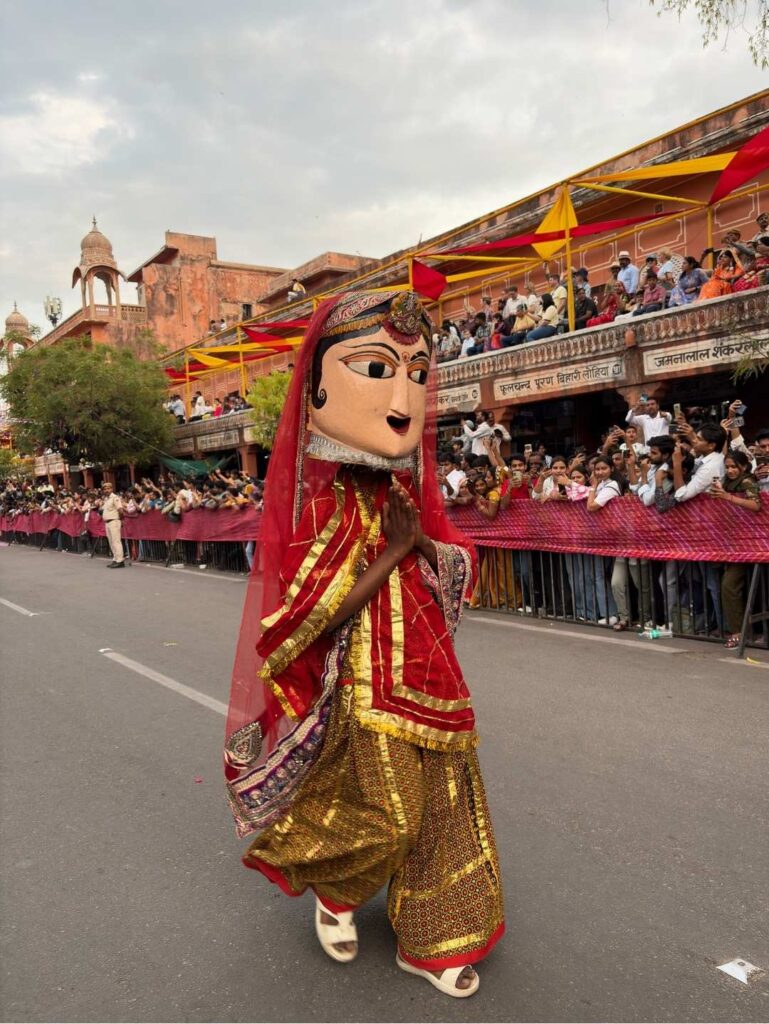
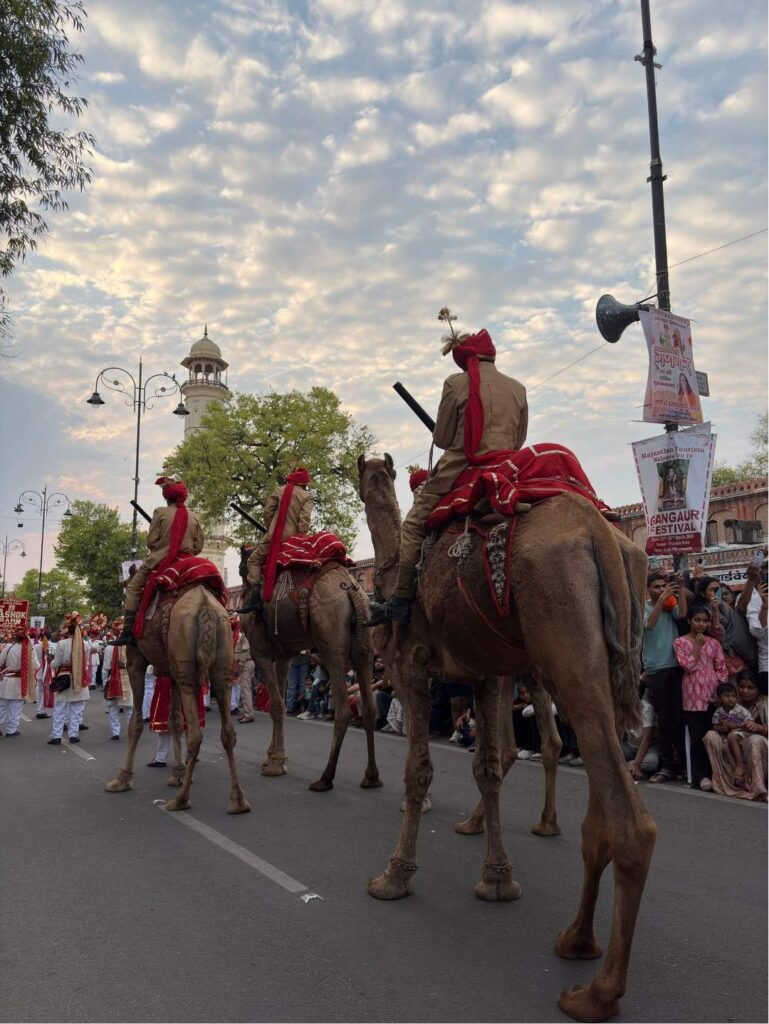
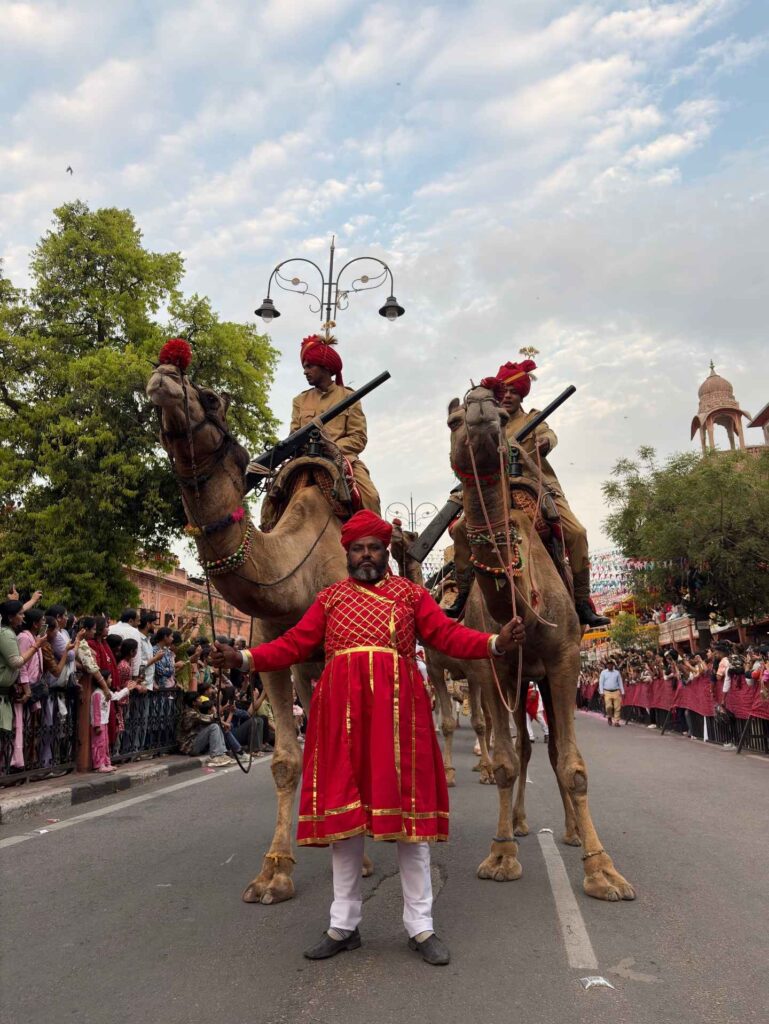
The Teej procession in Jaipur generally begins in the evening, around 5:00 PM. However, the exact timing and route can change from year to year, so checking the latest schedule before you head out is always a good idea. If you’re hoping to get a clear view or capture some beautiful photographs, try to arrive at least an hour early, as the streets can get quite crowded.
Complete Route of the Jaipur Teej Procession
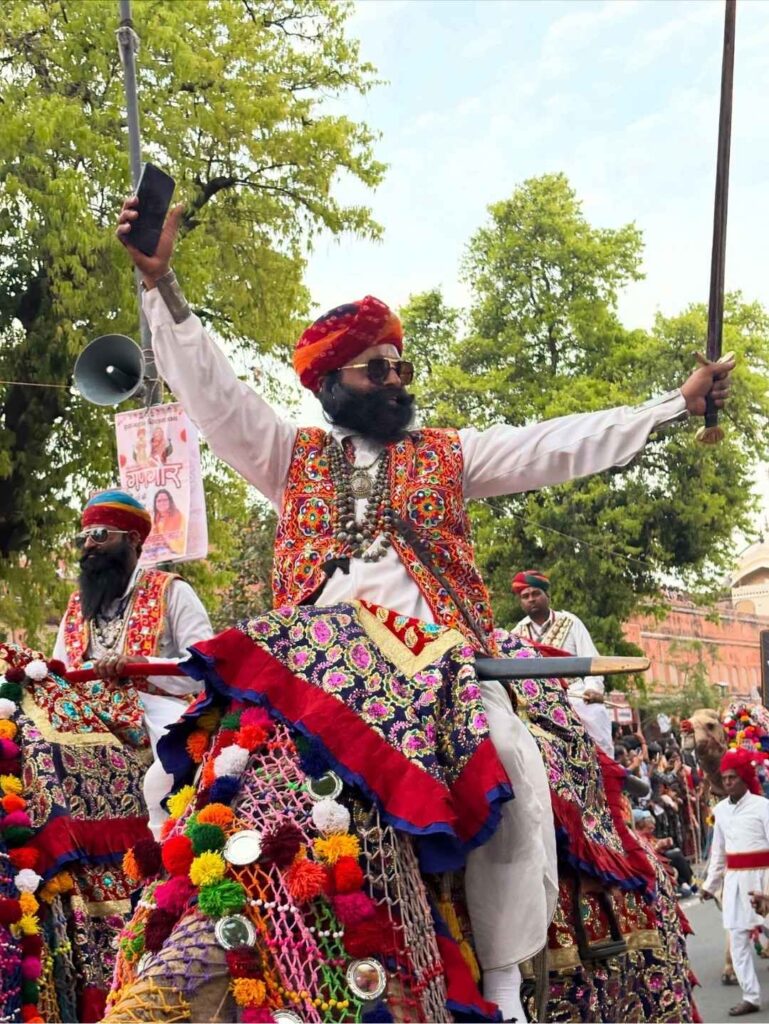
The Teej procession begins at the City Palace, where Teej Mata is carried in a beautifully decorated palanquin through Tripolia Gate. From here, the procession makes its way through Tripolia Bazaar and Chhoti Chaupar, continues along Gangauri Bazaar, and finally reaches Talkatora.
What makes this route special is the setting itself: Jaipur’s old shops, crowded balconies, and lively streets turn the entire Walled City into part of the celebration.
What to Wear During the Jaipur Teej Festival
Leheriya is one of the best things to wear during Teej in Jaipur. Its colourful wave pattern is closely linked with Rajasthan’s rainy season and Teej celebrations.
Women can wear a Leheriya saree, suit or dupatta with bangles, jewellery and mehendi. Men can choose a simple kurta-pajama. Wear comfortable shoes too, as you may need to walk through the busy streets of Jaipur to enjoy the procession.
Photography Guide: Best Places to Capture the Teej Festival
Teej in Jaipur is full of beautiful moments to photograph. Tripolia Gate is a great place to catch a first glimpse of the royal procession as it emerges from the City Palace. Along Tripolia Bazaar and Chhoti Chaupar, you can photograph decorated elephants, folk artists, musicians and the colourful crowds.
For wider street shots, head towards Gangauri Bazaar, where Jaipur’s old pink buildings create a beautiful background. Arrive early, find a safe spot and keep your camera ready; some of the best moments happen between the main events.
Frequently Asked Questions About the Teej Festival in Jaipur
When is Teej celebrated?
Teej is celebrated during the monsoon season, usually in July or August. The exact date changes every year according to the Hindu calendar.
Is Jaipur the best place to celebrate Teej?
Jaipur is one of the best places to experience Teej in Rajasthan. The city is known for its grand royal procession, local traditions, decorated elephants, folk performances and colourful markets.
Is the Teej procession free to watch?
Yes, the traditional Teej procession in Jaipur can be watched for free from the streets along its route. Try to arrive early if you want a good viewing spot.
What is the famous sweet of Teej?
Ghewar is the sweet most closely associated with Teej in Rajasthan. During the festival, sweet shops across Jaipur are filled with a variety of ghewar, including plain, malai, and mawa.
Are Teej and Gangaur the same festival?
No, Teej and Gangaur are different festivals, although both are widely celebrated in Rajasthan. Gangaur is celebrated in spring and is dedicated to Gauri (Goddess Parvati), while Teej comes during the monsoon season and celebrates the union of Lord Shiva and Goddess Parvati. Jaipur is famous for the traditional processions held during both festivals.