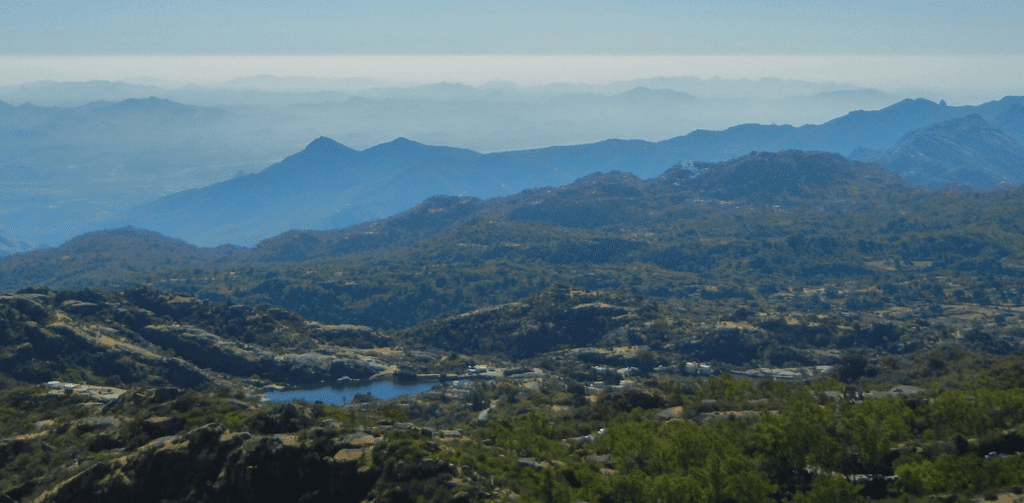

The Aravalli Hills have always been there.
Quietly shaping the land, the climate, and the people who settled around it.
These hills are not steep or dramatic like the Himalayas. They rise gently from the earth, without demanding attention. Yet for thousands of years, the Aravalli Range has protected North India in ways most of us rarely notice.
Only now, as parts of it slowly disappear, do we begin to understand how deeply we depend on it.
What are the Aravalli Mountains?
The Aravalli is considered the oldest mountain range in India.
Formed millions of years ago, these hills have been softened over time by rain and wind. Therefore, the Aravalli looks smooth and rounded rather than tall and jagged. Its age is visible in its gentle slopes and worn-down ridges.
The Aravalli Range stretches for about 670 kilometres, running from Gujarat, through Rajasthan and Haryana, up to Delhi NCR.
It may not appear imposing, but in terms of ecology and geography, its role has always been immense.
Where the Aravalli Range Lies in India
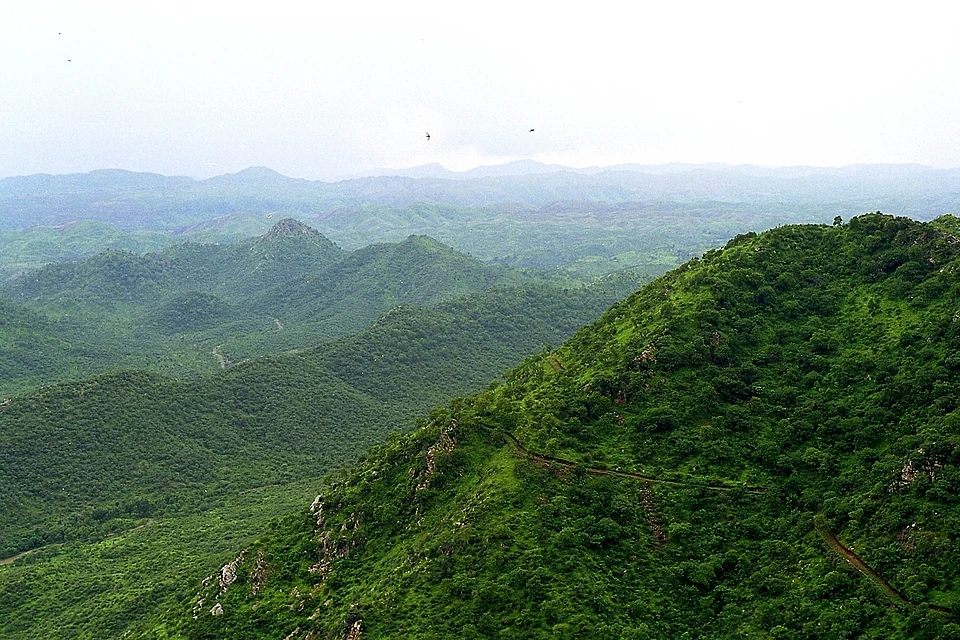
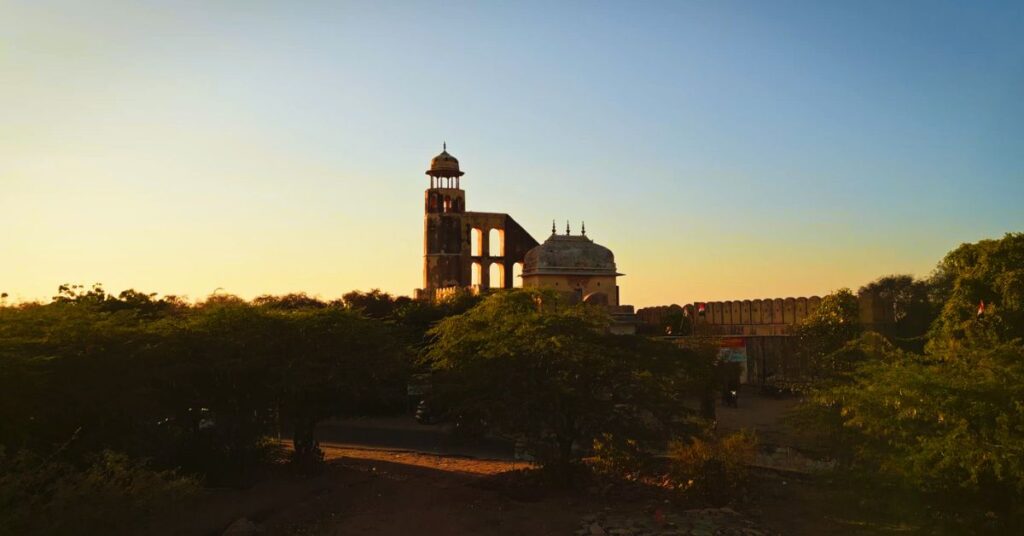
The Aravalli range passes through regions that are mostly dry to semi-arid. Over centuries, these hills have supported the growth of forests, villages, and some of North India’s oldest cities.
The range runs through:
- Gujarat
- Rajasthan
- Haryana
- Delhi NCR
Today, however, expanding cities are pushing closer to the Aravalli than ever before.. Urban growth, mining, and infrastructure projects are placing increasing pressure on its forests, land, and natural water systems.
Why the Aravalli Hills Are Important
In simple terms, the importance of the Aravalli lies in the quiet work it does every day.
A Natural Climate Barrier
The Aravalli Range acts as a natural barrier that helps slow the eastward spread of the Thar Desert.
By reducing the impact of hot desert winds and dust storms, these hills help moderate the climate of North India. Without the Aravalli, many regions would face harsher temperatures and drier conditions.
Water Storage and Groundwater Recharge
The landscape of the Aravalli absorbs rainwater slowly.
This allows water to seep into the ground, replenishing wells, lakes, and underground aquifers. Many traditional water sources in Rajasthan exist because of the unique geography shaped by the Aravalli hills.
In a region where water scarcity is common, this function is critical.
Forests and Wildlife
The Aravalli forests support birds, animals, and plant species that are adapted to dry environments.
These hills form one of the last remaining green belts in North India. They provide habitat for wildlife and help maintain ecological balance in areas increasingly affected by urban expansion.
Aravalli Map: How the Hills are Spread
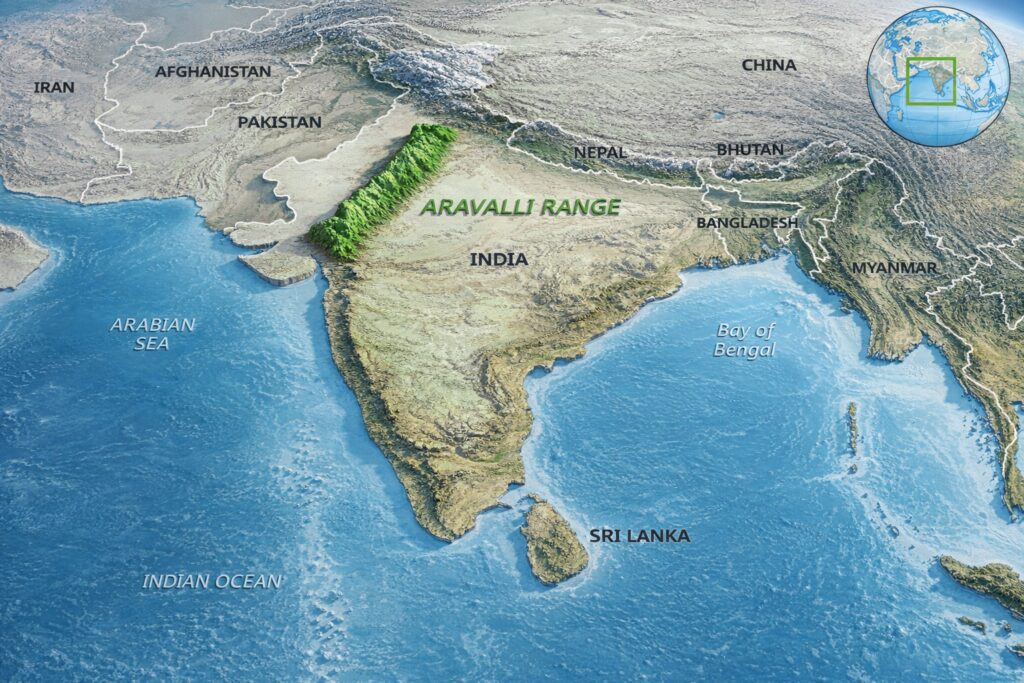
Looking at an Aravalli map makes its role clearer.
The range sits between desert regions and fertile plains, acting as a natural divide. Because of this position, the Aravalli helps with:
- Soil stability
- Water retention
- Protection against land degradation
Even small disturbances in these hills can create environmental effects far beyond the immediate area.
Why Are the Aravalli Hills Being Cut?
In recent years, growing concern has emerged over the damage being done to the Aravalli Hills.
Some of the main reasons include:
- Mining activities
- Urban construction and expansion
- Road and infrastructure development
- Authorities weakly enforce forest protection laws
In many areas, entire sections of hills have been levelled to make way for development.
What Happens If the Aravalli Disappears?
As a result, damage to the Aravalli does not stay local.
Its effects spread slowly across regions and become visible over time. These include:
- Falling groundwater levels
- Rising temperatures
- Loss of forest cover
- Declining air quality
At the same time, one important fact often gets ignored.
The Thar Desert lies just to the west of the Aravalli range.
The Aravalli stands between the desert and North India like a long, natural wall.
Slowly. Quietly. Firmly.
Environmental experts explain that if the Aravalli continues to be damaged, the desert sand will not stay where it is. Over time, it can begin shifting eastwards towards Delhi NCR, Gurugram, Faridabad, Haryana, parts of Uttar Pradesh, and eastern Rajasthan, including areas around Jaipur, Alwar, and Ajmer.
This shift does not happen overnight.
It happens slowly, almost invisibly, until the damage becomes permanent.
Once damaged, these natural systems take decades, sometimes centuries, to recover.
Aravalli: The Green Lungs of Delhi NCR
The concern around the Aravalli is not limited to Rajasthan.
Official records describe the Aravalli as the “green lungs of Delhi NCR”. helping control air quality and climate. Yet, in different states, rules are applied differently, sometimes even defining that hills below a certain height are “not Aravalli” at all.
Many people believe that the real danger lies in how definitions and protections around the Aravalli are changed on paper. When protection is weakened, mining and construction often find ways to continue, even when official statements say otherwise.
The fear is not imaginary. In 2018, entire hill sections in Rajasthan were cut and converted into flat land, leaving behind areas where complete hills simply disappeared.
This creates confusion, and confusion weakens protection.
Why the Conversation Around Saving the Aravalli Matters Now
Saving the Aravalli does not mean stopping all development.
It means understanding limits.
If these hills continue to disappear:
- Desert regions will expand
- Water scarcity will increase
- Cities will become significantly hotter
Protecting the Aravalli requires a balance between human needs and what nature quietly provides.
The Aravalli at a Quiet Turning Point
The Aravalli stands at a silent crossroads.
For centuries, it has protected this land without recognition or reward. Today, its future depends on awareness, responsibility, and restraint.
What happens to these hills will shape the future of North India more than most development projects ever could.
Frequently Asked Questions
Is the Aravalli Range the oldest in India?
Yes. The Aravalli is widely believed to be the oldest mountain range in India.
Why is the Aravalli Range important?
It regulates climate, recharges groundwater, supports forests and wildlife, and protects land from desertification.
Where is the Aravalli Range located?
It stretches from Gujarat through Rajasthan and Haryana to Delhi NCR.
Why do we need to protect the Aravalli?
Because losing it can lead to severe water shortages, extreme temperatures, and long-term environmental damage.