
Experiencing Harsil Valley Beyond the Camera
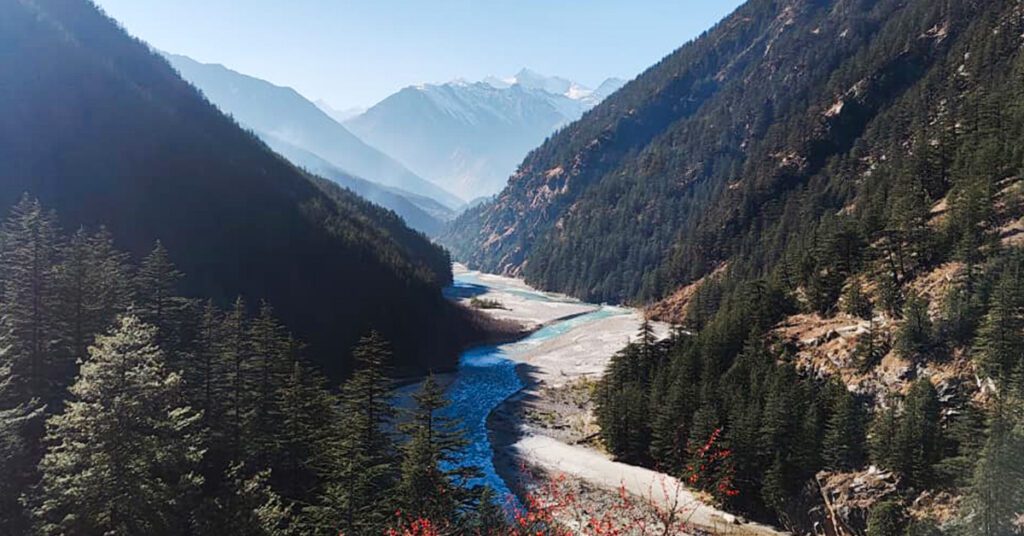
Harsil Valley in Uttarakhand, located close to Gangotri, is one of the most peaceful Himalayan destinations still untouched by mass tourism. I recently went to Harsil Valley with my office colleagues. The beauty of Harsil cannot be captured by any camera; it can only be seen with the eyes and felt by being fully present.
We did not have a fixed plan or many expectations. During the long mountain drive, shared meals, and quiet walks beside the river, the valley slowly revealed itself to us.
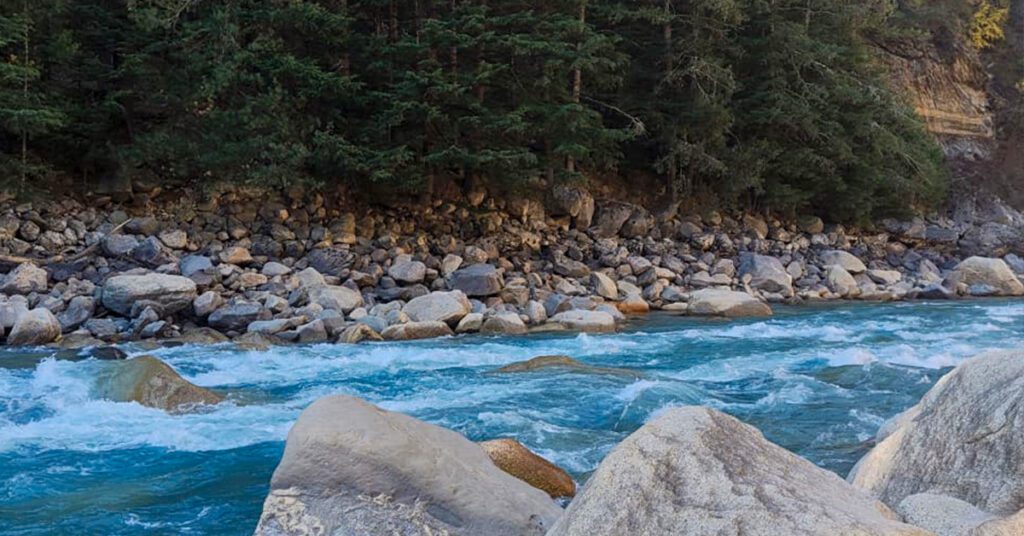
Where is Harsil Valley Located?
It is located about 25 kilometres before Gangotri at an Altitude of 9,005 ft (2,745 Metres) in the Uttarkashi district of Uttarakhand. It feels like pressing a pause button on life. Once you cross the Bhagirathi River and enter the valley, the noise of the world fades away.
Prayer flags flutter across the valley, apple orchards line the hillsides, and local communities preserve their culture through oral storytelling. Beyond its natural charm, Harsil holds strong spiritual importance due to its close connection with Gangotri Dham, Mukhba, and Bagori villages, where age-old traditions remain a living part of daily life
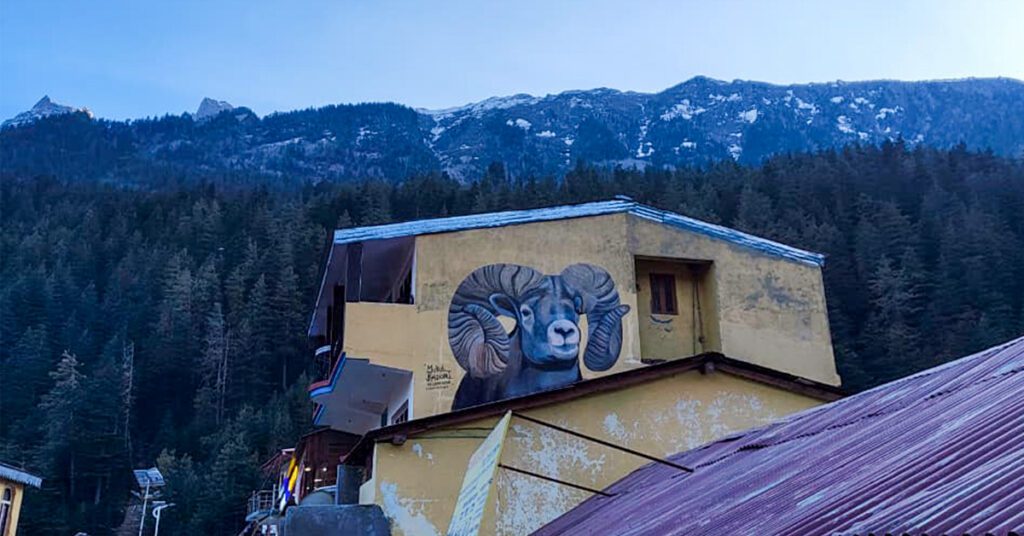
The British Wilson Story: How Harsil Valley, Uttarakhand, Captured a Foreigner’s Heart
One of the most fascinating stories of Harsil Valley, Uttarakhand, is that of Frederick “Pahadi” Wilson, a British officer who arrived during colonial times. Wilson wasn’t just passing through. He was deeply moved by Harsil’s beauty, the river, the forests, and the isolation. So much so that he settled here, married a local woman from the village, and made Harsil his home.
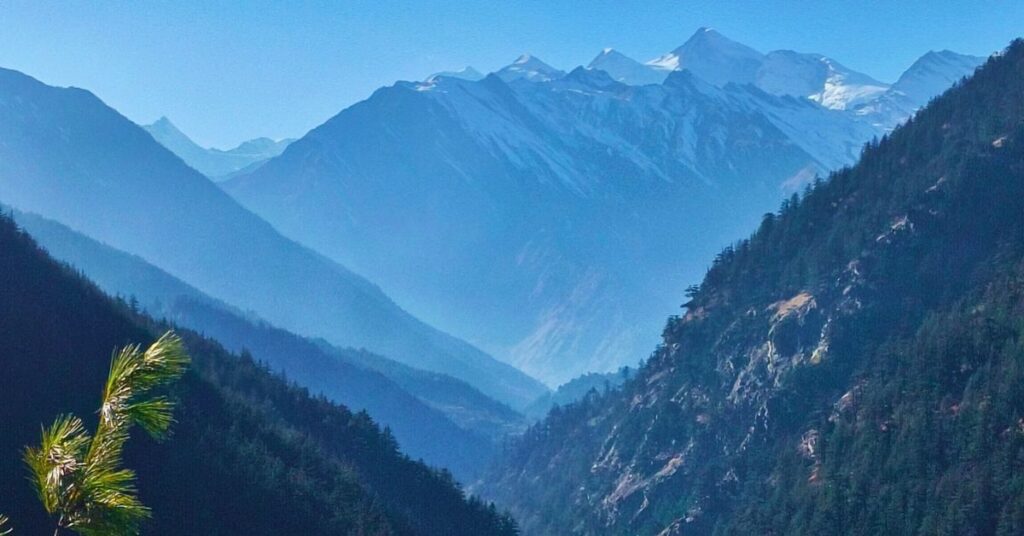
He introduced Apple cultivation to the region, which slowly transformed the valley’s economy. Today, Harsil is known as the“Apple Bowl” of Uttarakhand, and the orchards you see everywhere trace their roots back to Wilson’s experiments. His story isn’t told with bitterness here. It’s said as a reminder that Harsil has always had the power to make people stay.
Spiritual Significance of Harsil Valley and Gangotri Dham
Most people know Gangotri as one of the Char Dham, the sacred origin of the River Ganga. But few realise how closely Harsil Valley, Uttarakhand, is connected to it.
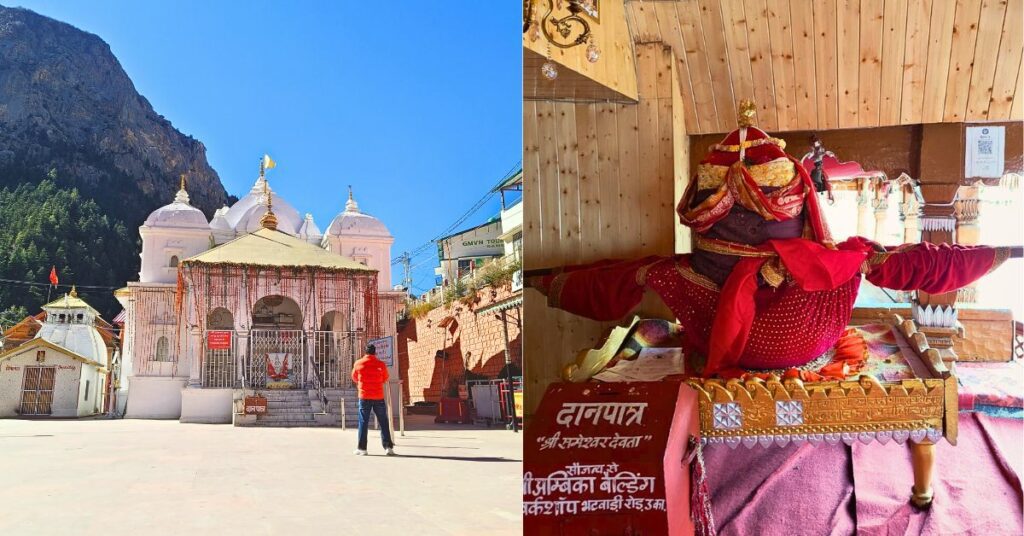
During the winter months, when heavy snow closes Gangotri, the idol of Goddess Ganga is brought down to Mukhba village, near Harsil. For six months, Mukhba becomes the spiritual home of the goddess.
When locals talk about this, they don’t sound ceremonial; they sound emotional. As if a family member has come home for the winter. That quiet devotion defines this entire valley.
Mukhba Village: The Winter Seat of Goddess Ganga
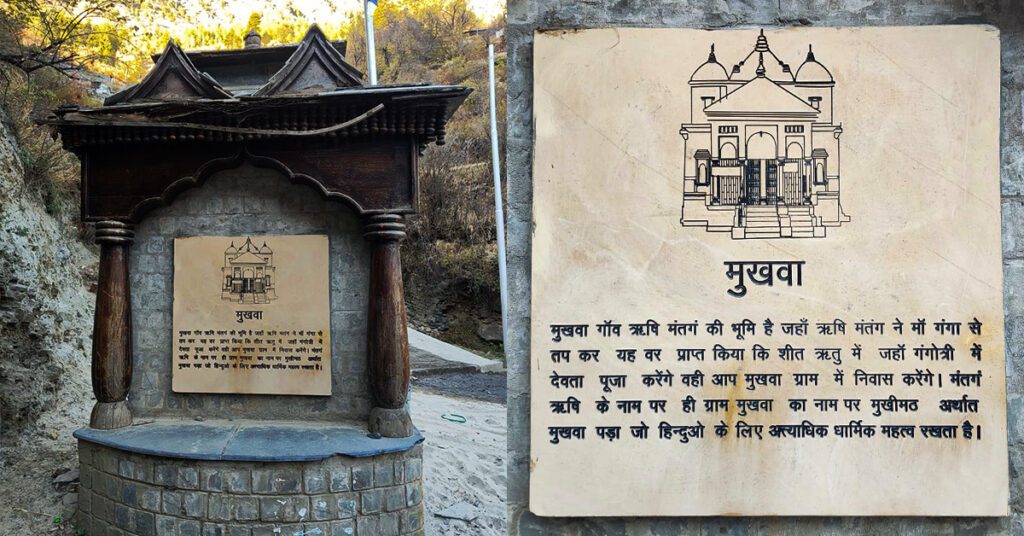
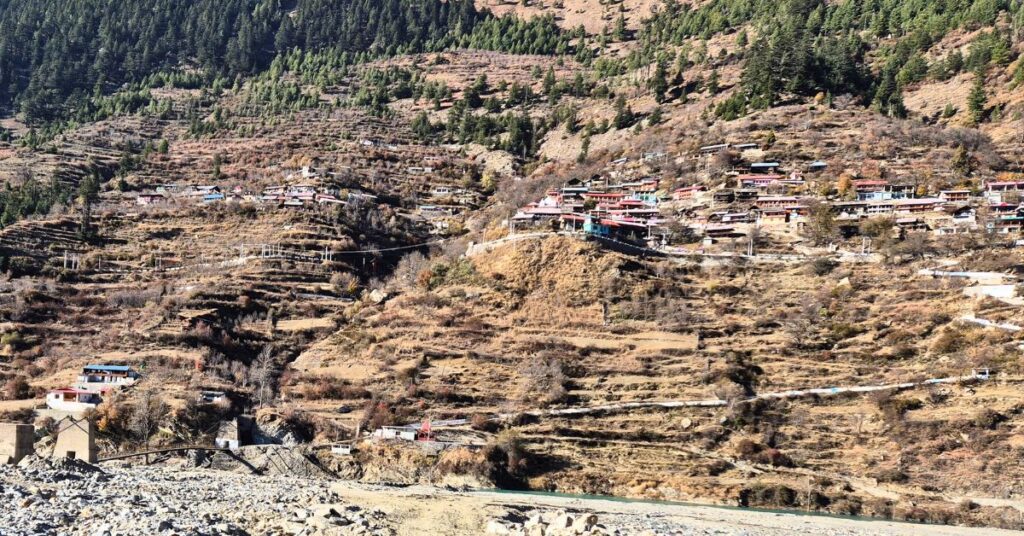
We visited Mukhba village in Harsil Valley, Uttarakhand, and it instantly felt different from crowded pilgrimage towns.
Stone houses. Wooden balconies. Smoke rising from kitchen chimneys. The temple stands not as a monument, but as part of daily life.
Mukhba village is the land of Rishi Matang. It is believed that Rishi Matang performed deep meditation and received a blessing from Goddess Ganga. According to this belief, during the winter season, when worship cannot be performed at Gangotri, the goddess resides in Mukhba village instead.
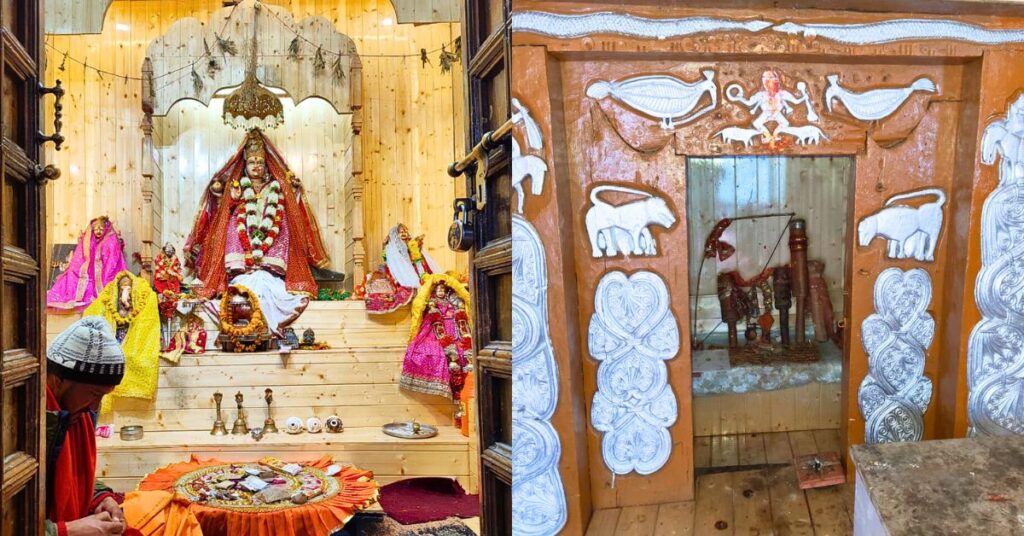
The village of Mukhba is named after Rishi Matang, and it holds great religious importance for Hindus. Locals believe Goddess Ganga chose Mukhba herself to rest here during harsh winters. Elders still share folklore about how the goddess protects the village from disasters, as long as the people respect the land and the river.
Local Folklore of Mukhba
According to village elders, Goddess Ganga once appeared in the villagers’ dreams, assuring them that she would protect their land if they treated her as family, not just a goddess. Since then, rituals here are intimate offerings, simple prayers are personal, and festivals feel like family gatherings.
Even today, people believe that Mukhba village in Harsil Valley, Uttarakhand, remains protected from major natural disasters due to the presence of Goddess Ganga.
Spiritual Significance of Harsil Valley and Gangotri Dham
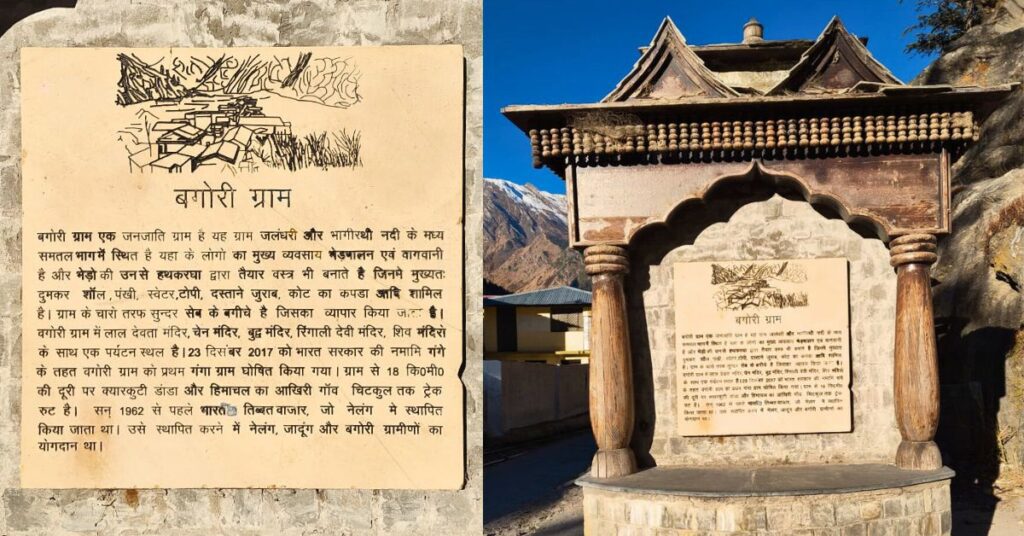
Bagori village, Harsil Valley, Uttarakhand, is a traditional tribal settlement located between the Bhagirathi (Jahnavi) and Jalandhari rivers. For many generations, the people of Bagori have depended mainly on sheep farming and agriculture for their livelihood. Wool from their sheep was used to make traditional clothing, including pattus, cholas, sweaters, socks, caps, jackets, and coats. These handmade woollen clothes were commonly traded in nearby markets.
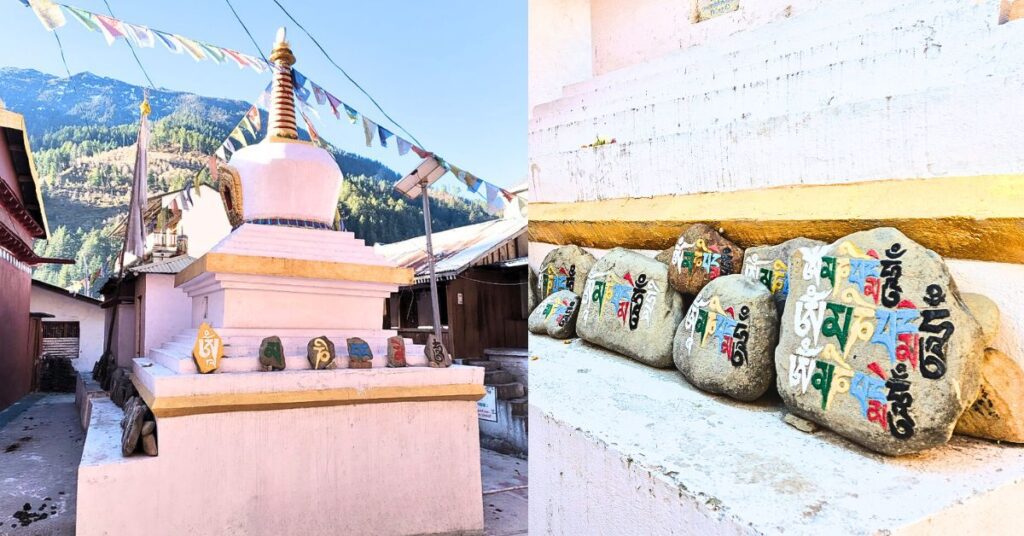
Bagori is also an important spiritual centre, surrounded by thick forests. The village is home to several temples, including Lal Devta Temple, Singali Devi Temple, and Shiva Temple, as well as a Buddhist monastery, reflecting the region’s cultural diversity. In December 2017, Bagori was declared the first “Ganga Village” of India under the Namami Gange programme.
The village also serves as a starting point for treks to Dharali, Dodital, and Chitkul in Himachal Pradesh. Before 1962, Bagori was known for its winter wool market, where traders from nearby and border villages gathered. This made Bagori one of the most important trading and cultural centres in the valley.
Bagori’s Folk Beliefs
Locals believe that the surrounding forests are guarded by van devtas (forest deities). Cutting trees without permission or disrespecting the land is said to bring misfortune. Because of this belief, the forests around Bagori remain surprisingly well preserved.
Many elders narrate stories of travellers who ignored local warnings and faced sudden storms or landslides, tales that blur the line between myth and nature’s warning.
Harsil Valley’s Quiet Bollywood Connection
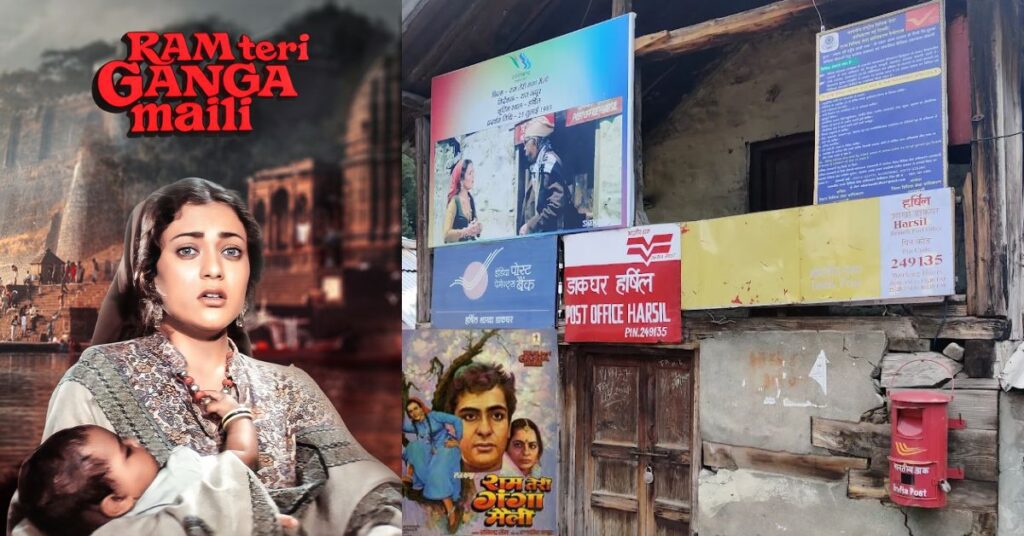
Harsil Valley, Uttarakhand, also has a quiet connection with Bollywood.
One of Raj Kapoor’s famous films, Ram Teri Ganga Maili, was shot in and around this valley. The clean river, the open landscapes, and the untouched Himalayan mountains seen in the film were real. Nothing was created or added for the camera. It all came from Harsil itself.
When you watch those scenes today, the purity on the screen feels honest and true. Even now, the Bhagirathi River flows gently through the valley, just as it did back then.
Some places don’t announce themselves loudly.
They don’t have dramatic signboards or crowded viewpoints.
Harsil Valley, Uttarakhand, is one such place.
At India in Lens, we document hidden places and forgotten stories across India, focusing on destinations like Harsil Valley that quietly hold deep cultural and spiritual meaning.
How can one reach Harsil Valley?
Harsil Valley can be reached by road from Dehradun, Rishikesh, or Uttarkashi. The nearest major town is Uttarkashi, from where regular taxis and buses are available. The closest railway station is Dehradun, and the nearest airport is Jolly Grant Airport.
What is the Best Time to visit Harsil Valley, Uttarakhand?
April to June: Pleasant weather, clear views, blooming forests
September to November: Apple season, golden landscapes, fewer tourists
December to February: Snowfall, spiritual calm (road conditions permitting)
Is Harsil Valley suitable for a peaceful trip?
Harsil Valley is ideal for travellers looking for a quiet and meaningful journey. It is perfect for slow travel, photography, nature walks, and experiencing the Himalayas without crowds or commercial distractions.
Is Harsil Valley worth visiting?
Yes, Harsil Valley is worth visiting for travellers seeking natural beauty, silence, and cultural authenticity. Its riverside landscapes, traditional villages like Mukhba and Bagori, and untouched surroundings make it one of Uttarakhand’s most serene destinations